
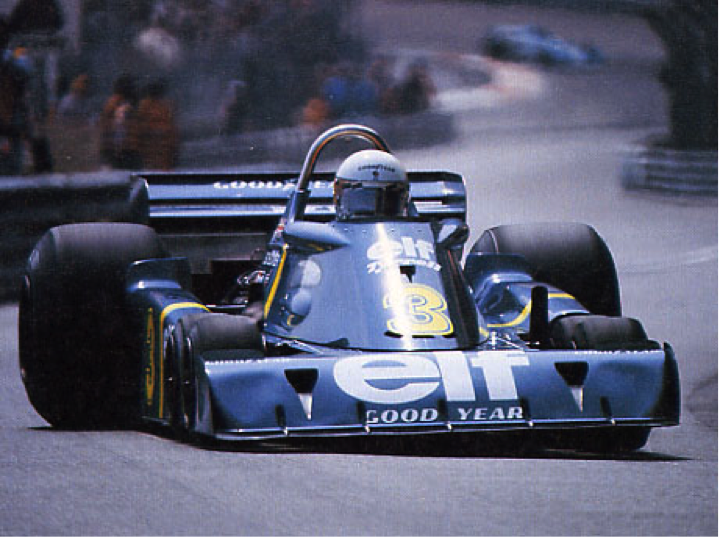
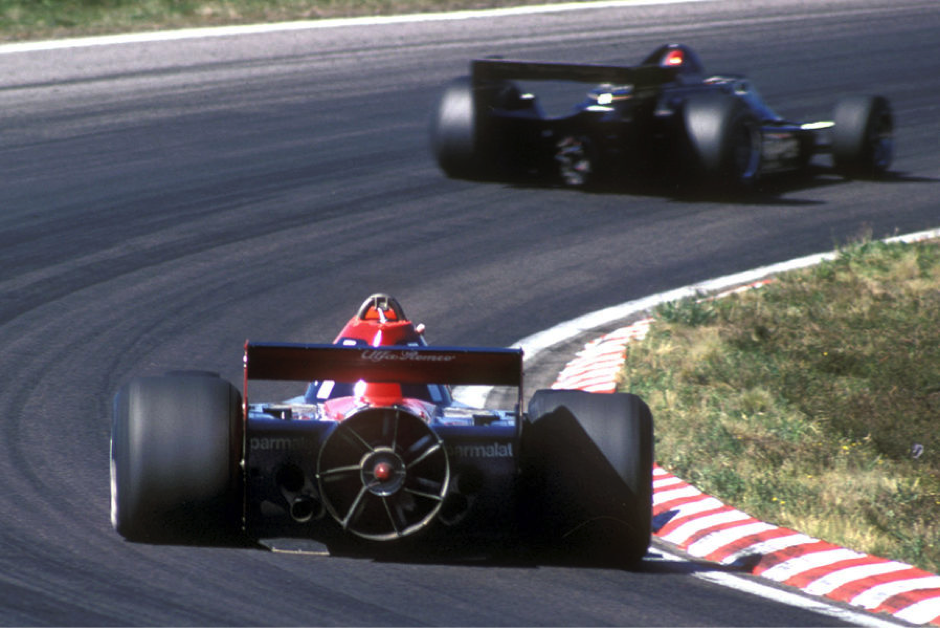
A ridiculous 6 wheel car, a whacky racer with a fan attached to the rear and a GP winner with a front wing so big it could double as a family dinner table.
These are some of the designs in Formula 1 of yesteryear that pushed the boundaries of race car design. Skip to 2015 and F1 is a different beast, a set of strict rules and regulations means that most of the cars look very similar and the rules dictate the advancement in technology. That brings me on to Le Mans or more specifically the Le Mans Prototype (LMP) class. This class of racing has arguably become the pinnacle of radical forward thinking design in motorsport – with the anything goes, as long as it’s safe, philosophy of rules.
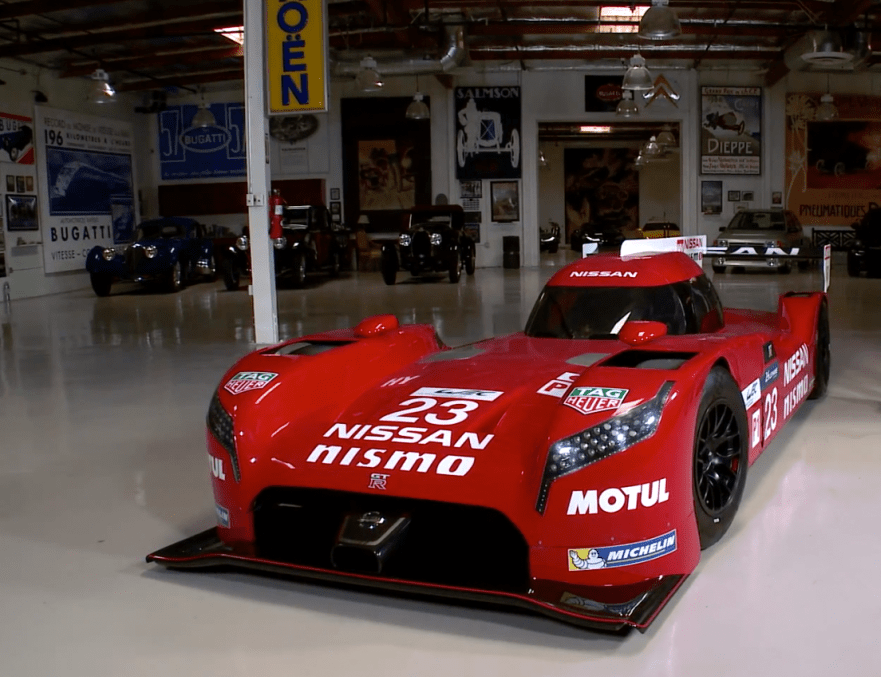
This weekend you will see Audi, Toyota, Porsche and Nissan battle it out in the LMP class. This class brought diesel power and hybrid racing to the mainstream. The Nissan is undoubtedly the most radical car racing in this year’s Le Mans and arguably the craziest in current motorsport. A car with over 1,200 bhp, that is front engined and principally front wheel drive. The Nissan engineers believe this set up is the most efficient for aerodynamics – crucial at Le Mans with the huge Mulsanne straight. Chief engineer Zack Eakin explains the car to Jay Leno here…
Let’s hope it does well this weekend and we continue to see the boundaries of motorsport pushed every year at Le Mans in the weird and whacky world of the Prototype class.
Here are the vital stats:
Engine:
Nissan VRX30A 3.0 L (3,000 cc) direct-injected twin-turbochargedV6 engine in a longitudinal front mid-engi ne configuration
BHP: 1,250 BHP (500 BHP from Combustion Engine and approx.. 750 BHP form the flywheel system)
| Transmission | Xtrac five-speed hydraulically-activated sequential gearbox andepicyclic reduction gearbox with limited-slip differential |
Weight: Appr. 880 kg (1,940 lb)
| Notable drivers | Marc Gené Harry Tincknell Olivier Pla Tsugio Matsuda Michael Krumm Jann Mardenborough Alex Buncombe Max Chilton Lucas Ordóñez |
 Cog Lfe